
Ireland Holidays
OVERVIEW
Known as the Emerald Isle, it's a genuine paradise for anyone who'd rather be outdoors than in. Hiking, cycling, boating — the scenery barely lets up wherever you go. Adventure seekers can kayak across calm waters or stand beneath towering cliffs with views that stop you in your tracks. A drive around Connemara's iconic lakes reveals a landscape unlike anywhere else, and Ireland's beaches, each with its own character, are well worth the detour.
Fishing enthusiasts will find plenty of spots across the lakes and coastline, while hikers and trekkers have no shortage of scenic routes to work through. Golf lovers are equally well catered for, with Ireland home to some genuinely world-class courses.
This is a country steeped in legend, and it shows — ancient dolmens, medieval castles, and grand manor houses turn up across the countryside. For a proper dose of Celtic history, head to the Aran Islands and their traditional sheep farms. And naturally, no trip is complete without Dublin, where history reveals itself around every corner.
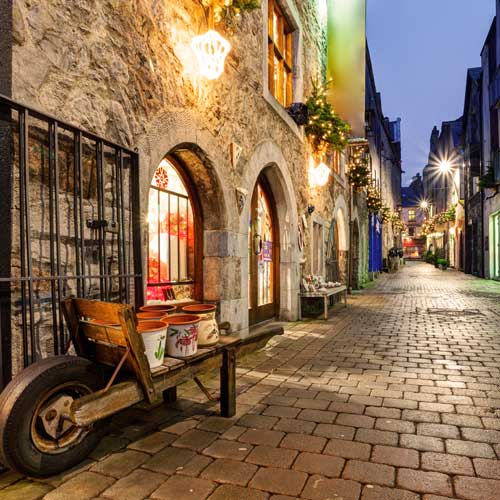
Ireland at a glance
Winter Average
Summer Average
Time Zone
5 Must-Do things
in Ireland
Must-See places
in Ireland
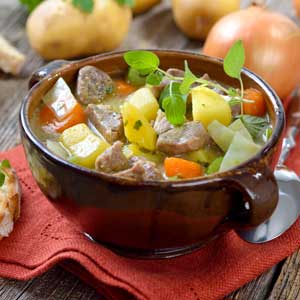
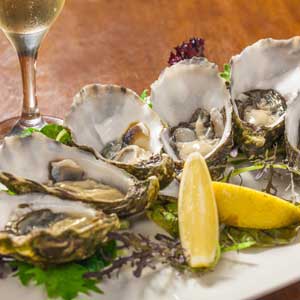
Must-Try food
in Ireland

Must-Pack
for Ireland

Wind-Proof Umbrella
Parts of Ireland see rain on up to 255 days a year, so a shower or two is close to guaranteed. A sturdy, wind-proof umbrella will earn its keep.
Raincoat
If outdoor walks or hikes are on the agenda, a reliable raincoat will keep you dry and considerably more comfortable.
Waterproof shoes or boots
Especially useful for hiking near the cliffs or exploring the countryside, waterproof shoes or boots keep your feet dry — genuinely worth packing, particularly outside the drier months.
Sunglasses
Even Ireland gets its fair share of sun between the showers. A good pair of sunglasses comes in handy whenever it finally breaks through the clouds for the afternoon.
Backpack
A small backpack is ideal for the daily essentials as you explore Ireland's scenery and its smaller towns.
Adaptor plug
Travel with a universal adapter to keep your devices charged — just check beforehand that it suits Ireland's outlets.
Other things to know about Ireland before you go
Time for a
new
holiday
Take a look at our selection of Ireland holiday packages
Holiday Packages IrelandPlaces to visit in Ireland
Why would you go on holidays in Ireland?
Among its best-known stories is the Leprechaun, a mischievous, magical figure who's become something of a global export — usually pictured as an elderly gentleman in green, red-haired, four-leaf clover in hand.
There's plenty to fill a trip here, particularly if you're travelling with family or in a group. From the Kerry Islands to the Cliffs of Moher and the Connemara region, the views rarely let up. Motorhome travel across the Irish countryside suits more adventurous visitors especially well — landscapes, wildlife, pubs, history, and small traditional towns, all within easy reach.
The Aran Islands rank among Ireland's most striking natural areas — Inishmore, Inishmaan, and Inisheer make up this small archipelago, shaped as much by the surrounding ocean as by its own culture and traditions. Historically, Aran sailors navigated these waters in wicker boats wrapped in tarpaulin, fragile vessels for genuinely rough seas. Fishing remains the area's economic backbone, and the islands take their name from herring, still central to the local diet — surströmming, a fermented herring delicacy, counts among the country's more distinctive culinary traditions, and is sold in tins.
The archipelago's network of stone walls and centuries-old forts is genuinely captivating, as is the Burren nearby, with its vast limestone plateau drawing hikers from well beyond Ireland's shores.
Add-ons to any Ireland trip might include lake excursions, private tours, cultural city stops, or a look at some of the more unusual corners of the "Kingdom" of Ireland.
Ireland's nickname — the "Green Island," home to "forty shades of green" — doesn't tell the whole story, though. The Burren, running along the western coast, is proof of that: a limestone plateau threaded with streams and lakes, carved through with labyrinthine caves, and covered in a surprisingly varied spread of plant life.
Dublin is, without much argument, the natural first stop on any Ireland trip — worth at least two full days. Beyond being genuinely lovely, the city doubles as a living record of the nation's history, much of it accessible through free museums. There's a mood to the place that's hard to describe until you're standing in it. Make time for the pubs, where the beer — Guinness chief among them — is worth the visit alone, and the brewery's own museum sits right there in the city. Honestly, there's no need for a rigid itinerary in Dublin; let your instincts steer the day instead.
Ireland's cultural range, paired with the famously warm welcome the Irish extend to visitors, rounds out this picture of a country painted in a thousand shades of green.
The weather here is more unpredictable than you'd expect, especially in summer. But there's beauty in that too — watch how the light transforms a landscape freshly soaked by rain, and a grey sky starts to look like something other than bad luck.
Known as "The Steps of the Ocean," the Giant's Causeway comes wrapped in legend — folklore has it that giants carved the path toward Scotland, determined to reach a rival across the water. Geologists tell a rather different story: around forty thousand interlocking basalt columns, some reaching twelve metres in height, formed by volcanic lava flows over sixty million years ago as the rock cooled and cracked into its now-famous hexagonal shapes. As Northern Ireland's single most visited attraction, it's a genuinely essential stop, whatever version of the story you find more convincing — and it's easy enough to combine with a day exploring the wider Antrim coastline, from Carrick-a-Rede's rope bridge to the ruins of Dunluce Castle perched above the sea.


