Get inspired...
Mauritius Travel Guide: What First-Time Visitors Need to Know
Updated: 12 December 2025 - Author: Quintin Carlson
Mauritius sits alone in the Indian Ocean, a few hours' flight from Johannesburg and Cape Town, yet far enough from the mainland to feel like a proper escape. If you've never been, working out where to start can be the hardest part: the island is small, but it packs mountain ranges, coral lagoons, a colonial-era capital and old volcanic craters into a couple of hours' drive of each other.
This guide is built for exactly that first trip: when to go, which coast fits your travel style, what's worth doing away from the beach, and how Mauritius compares with its Indian Ocean neighbour, Zanzibar. If your week is mostly about doing nothing on a lagoon, start with the "Where to Stay" section below. If hiking and culture matter to you as much as the beach does, jump straight to what's inland.

Getting Your Bearings: Geography and Culture
Mauritius lies in the Indian Ocean roughly 2,000km off the south-east coast of Africa, east of Madagascar. It's a compact island — you can drive across it in under two hours — with a mountainous, forested interior ringed by a coral reef that keeps most of the coastline calm and shallow close to shore.
A genuinely mixed culture.
The population traces back to Indian, African and Malagasy, Chinese, and French and British settlers, and that mix shows up everywhere: temples, mosques, churches and pagodas often sit within a few streets of each other in the same town. English is the official language, French is widely spoken, and Mauritian Creole is what you'll hear on the street. The food follows the same pattern — expect Indian curries, Chinese noodle dishes and French-influenced seafood on the same menu, sometimes at the same table.
When to Go
Mauritius has a tropical climate, so there's no genuinely bad time to visit — it's more a question of matching the season to what you want from the trip.
May to December is the dry season and the most reliable stretch for sunshine and lower humidity. June to August is the coolest period (Mauritian winter), pleasant for hiking and sightseeing but a little cool for some swimmers, with sea temperatures in the low-to-mid 20s°C. December to April is warmer and more humid, with a higher chance of short, heavy downpours, and this period also carries the main cyclone risk, concentrated mostly between January and March. If your dates are flexible, May, June, September or October offer the best balance of good weather and thinner crowds.
Choosing Where to Stay
Mauritius doesn't really have a single "best" base — it depends on what you want the week to feel like.
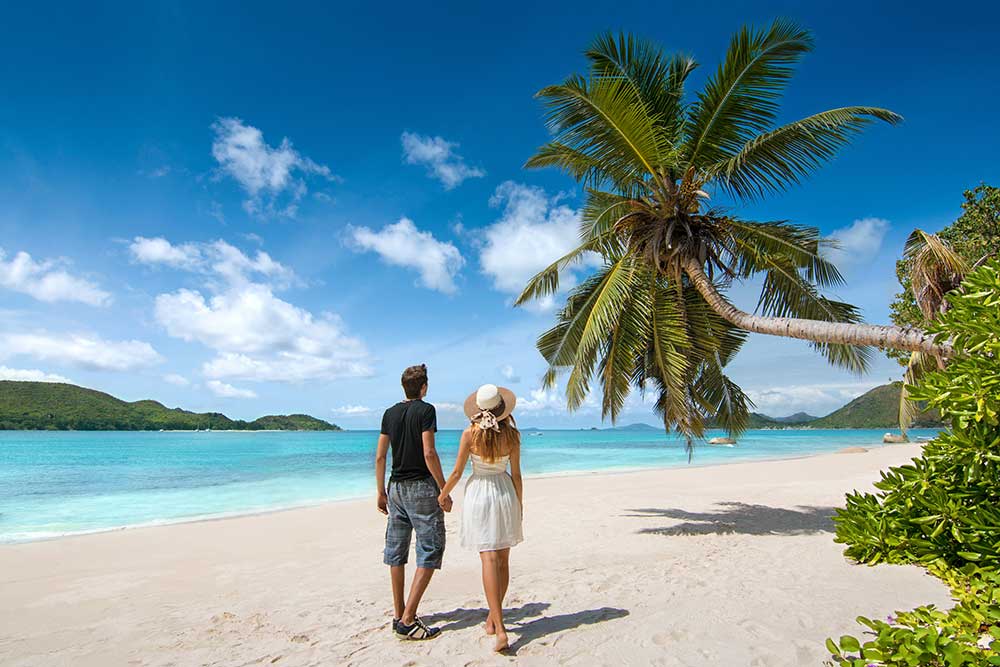
Grand Baie, on the north coast, is the liveliest option: restaurants, boat trips, watersports operators and shopping within walking distance of most hotels, plus easy access to catamaran trips to the northern islets. Flic en Flac, on the west coast, trades some of that buzz for calmer water, good snorkelling close to shore, and some of the island's best sunsets. Belle Mare and the east coast are where most of the postcard-style lagoon photos come from — wide, sheltered beaches and larger resort properties, well suited to families who want to stay put. Le Morne, in the south-west, sits beneath a dramatic basalt peak and is the island's kitesurfing hub, better suited to travellers who want scenery and wind sports over nightlife.
If you're not sure which fits, Quintrip's
Mauritius holiday packages
are organised by resort and region, and it's worth comparing
Beachcomber's Mauritius properties
if you'd rather stick with one well-known operator across different coasts.

Things to See and Do Beyond the Beach
The reef and the beaches get most of the attention, but Mauritius's interior is worth at least a day or two of any itinerary.
Black River Gorges National Park, in the south-west, is the island's largest protected area — forested ravines, waterfalls and marked trails ranging from an easy hour's walk to a full day's hike, with lookout points over the west coast. Chamarel, nearby, is home to the Seven Coloured Earths, a small dune of naturally striped volcanic soil, usually visited alongside a nearby waterfall and a working rum distillery on the same half-day out. Port Louis, the capital, rewards a slower visit than most day tours allow: the Central Market, the waterfront and the Aapravasi Ghat — a UNESCO World Heritage Site marking the arrival of indentured labourers from India — are all within walking distance of each other. For more detail on the city itself, see our Port Louis city guide.
For a day away from the main island, Ile aux Cerfs, off the east coast, is the standard boat-trip destination for a white-sand islet and a round of golf, while Rodrigues, a short flight away, is a quieter alternative for travellers with a few extra days who want to add a second island to the trip. Divers and snorkellers wanting a fuller rundown of the island's reefs can also see our Mauritius water sports and diving guide.
Mauritius or Zanzibar?
Both islands are popular Indian Ocean options from South Africa, and the comparison comes up often enough to be worth a straight answer.
- Mauritius
— best for: combining beach time with hiking, a proper capital city and varied scenery in one trip; trade-off: more built-up in places, with more polished resort infrastructure than rustic charm.
- Zanzibar — best for: a slower Swahili-coast pace, Stone Town's old town and spice tours, and some of the region's better dive sites; trade-off: fewer organised inland activities, and longer travel times between areas of the island.
Neither is the "budget" or "premium" choice by default — both run from simple guesthouses to five-star resorts, so it usually comes down to whether you want one long coastline or several distinct regions to explore.
Planning Your First Trip
A first trip to Mauritius works best with at least seven nights — long enough for a few days settled at a resort plus a day or two exploring inland or visiting Port Louis. Most South African travellers fly directly into Sir Seewoosagur Ramgoolam International Airport near Mahébourg, on the south-east coast, so it's worth factoring that into which region you choose if you'd rather not spend your first transfer crossing the island.
Quintrip puts together Mauritius holiday packages that combine flights, transfers and accommodation across all four coasts, so it's worth comparing a couple of regions before settling on the first resort you see.
Quick Mauritius Travel FAQ
- What's the best time of year to visit Mauritius? May to December is the driest stretch overall, with June to August the coolest and September–October offering a good balance of weather and fewer crowds.
- What currency and language will I need? The Mauritian Rupee is the local currency, though major resorts and tour operators often accept cards; English is the official language, with French and Mauritian Creole widely spoken.
- How long is the flight from South Africa? Direct flights from Johannesburg take around 4 hours; routes from Cape Town vary by airline and season.
- How many days should I plan for a first visit? Seven nights is a comfortable minimum to combine beach time with at least one or two days inland.
- Do South African travellers need a visa? No — South African passport holders can enter Mauritius visa-free for short tourism stays, though it's worth checking passport validity requirements (typically six months beyond your travel dates) before you fly.
Mauritius rewards a bit of upfront planning more than most Indian Ocean destinations — which coast, which season, and how much time you set aside for the interior all change the trip quite a bit. Once those three are sorted,
Quintrip
can help put the rest of the package together.

Related Posts