Get inspired...
La Digue, Seychelles: Anse Source d'Argent and Life Without Cars
Updated: 11 March 2026 - Author: Mpho Pheko
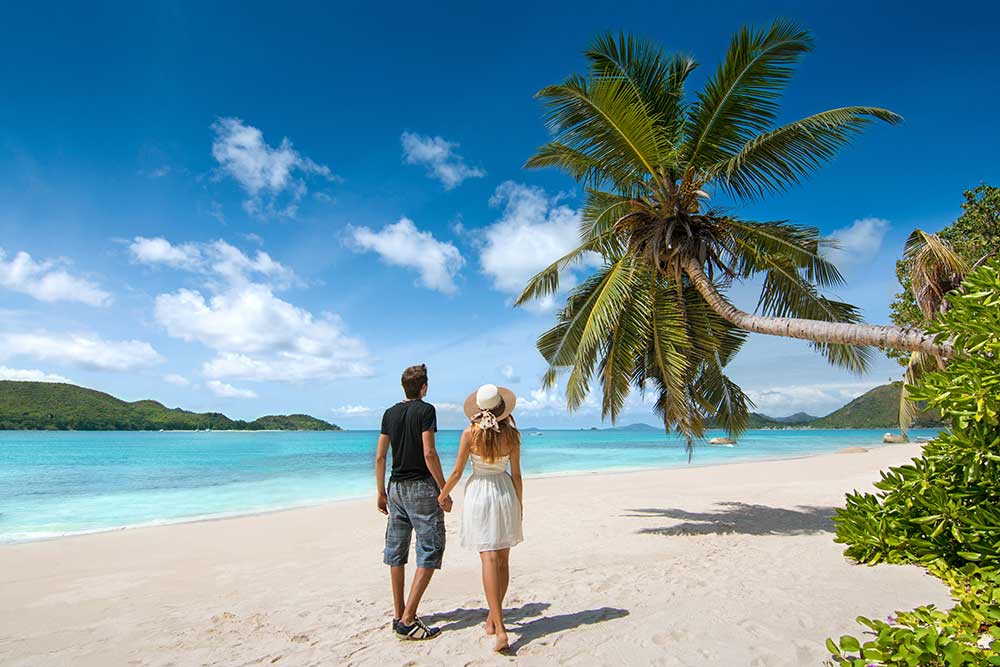
Of the three main islands most visitors to the Seychelles pass through — Mahé, Praslin, and La Digue — it's La Digue that tends to stay with people longest. It's the smallest of the three, the slowest-paced, and home to Anse Source d'Argent, arguably the most photographed beach in the entire Indian Ocean. Getting there takes a little more effort than flying straight into a resort, but that effort is part of what keeps La Digue from feeling like everywhere else.

A Beach Built From Granite
Anse Source d'Argent is unusual in a way that's hard to appreciate from photos alone. The Seychelles' granite islands are a geological rarity — most oceanic islands are volcanic or coral-based, but La Digue and its neighbours are made of ancient granite, pushed up from the seabed millions of years ago. At Anse Source d'Argent, that granite has weathered into enormous rounded boulders, pink-grey and smoothed by wind and salt spray, scattered along the shoreline and rising straight out of shallow turquoise water.
The beach itself is broken into a series of small coves formed by these boulders, each a slightly different size and shape, with fine white sand and calm, shallow water in front of them — a natural result of the reef just offshore, which keeps the surf gentle. It's a beach best explored slowly, picking a way between boulders rather than walking a single stretch of open sand.
Life Without Cars
What sets La Digue apart from Mahé and Praslin isn't just the beach — it's the pace of the island itself. Cars are almost entirely absent; the main way of getting around is by bicycle, with ox-carts still used in some parts as a nod to how the island moved before bicycles arrived. Renting a bike on arrival is the standard way to explore, and it changes the rhythm of a visit: nothing is more than a short ride away, but nothing is rushed either.
This also means La Digue rewards a slower visit rather than a single-day stopover. Beyond Anse Source d'Argent, the island has several quieter beaches worth cycling to, along with a handful of small guesthouses and restaurants clustered around La Passe, the main settlement.
Getting to La Digue
La Digue has no airport of its own, so access is by boat, typically a ferry connection from Praslin (itself reached by air or boat from Mahé) or, less commonly, directly from Mahé depending on the season and operator. This makes La Digue best suited to a multi-island Seychelles itinerary rather than a single-destination trip — most visitors combine a few nights on Mahé or Praslin with a shorter stay, or even a day trip, on La Digue itself.
Quintrip's
Seychelles holiday packages
can be built around this kind of multi-island stay, with a consultant able to sequence the inter-island ferry connections so that time on La Digue doesn't get swallowed up by transit days.

Planning the Trip
The Seychelles sits close to the equator and stays warm year-round, so there's no single "wrong" season to visit, though the period from May to September brings the southeast trade winds, which can mean choppier boat crossings between islands — worth factoring in when planning inter-island travel to La Digue specifically. October to April tends to bring calmer seas and warmer water, generally the more comfortable window for the ferry crossing and for swimming at Anse Source d'Argent itself.
A Quintrip consultant can help sequence a Mahé–Praslin–La Digue itinerary around these seasonal patterns, along with current pricing across the Seychelles package range.
FAQ
Why are there no cars on La Digue?
The island has historically favoured bicycles and ox-carts over cars, and this has remained part of its character — most visitors get around by rented bicycle.
How do you get to La Digue?
There's no airport on La Digue — access is by boat, usually via a ferry connection from Praslin.
Is Anse Source d'Argent good for swimming?
Yes — a reef just offshore keeps the water calm and shallow, making it well suited to swimming, though the granite boulders mean it's better explored slowly than walked in a straight line.
How long should you spend on La Digue?
Many visitors do it as a day trip from Praslin, but an overnight stay or longer allows time to see the quieter beaches beyond Anse Source d'Argent without rushing.
When is the best time to visit La Digue?
October to April generally brings calmer seas for the ferry crossing and warmer water; May to September brings stronger trade winds that can make inter-island boat travel choppier.

Related Posts