Get inspired...
The Coco de Mer: Seychelles' Protected Giant Seed
Updated: 13 May 2026 - Author: Quintin Carlson
Among the Seychelles' endemic species, the coco de mer stands out for a simple reason: it produces the largest seed of any plant on earth, and it grows naturally in only one place in the world. Seeing the palm that produces it, and understanding why the seed itself is so tightly protected, is one of the more distinctive things to do on a Seychelles trip that isn't about the beach.

A Seed Found Nowhere Else
The coco de mer palm is endemic to just two islands in the Seychelles — Praslin and the smaller Curieuse — meaning it doesn't grow naturally anywhere else on earth. Its seed, often called the "sea coconut" because husks were historically found washed up on distant shores long before anyone knew where the palm actually grew, can weigh over 20 kilograms, making it the heaviest seed produced by any plant species. The seed's distinctive double-lobed shape has made it a recognisable symbol of the Seychelles, appearing on everything from the national emblem to souvenir shops across the islands.
The Vallée de Mai
The Vallée de Mai, a protected forest on Praslin, is the best place to see coco de mer palms growing in their natural habitat, alongside several other endemic plant and bird species. It's a UNESCO World Heritage Site specifically because of this rare, largely untouched palm forest ecosystem — a rarity in a world where most native forest of this kind has long since been cleared. Guided walks through the valley explain both the palm's unusual biology and the forest's broader ecological significance.
Why the Seeds Are Protected
Because coco de mer palms grow so slowly and only in this small, specific area, the seeds are protected by strict Seychellois law — every coco de mer seed sold legally must carry an official government stamp and certificate, and exporting one without this documentation is illegal. This matters directly for visitors: a coco de mer souvenir bought without proper certification can be confiscated at customs, both in the Seychelles and in the destination country, so it's worth only buying one from an authorised vendor with the correct paperwork if it's something you want to bring home.
Fitting It Into a Seychelles Trip
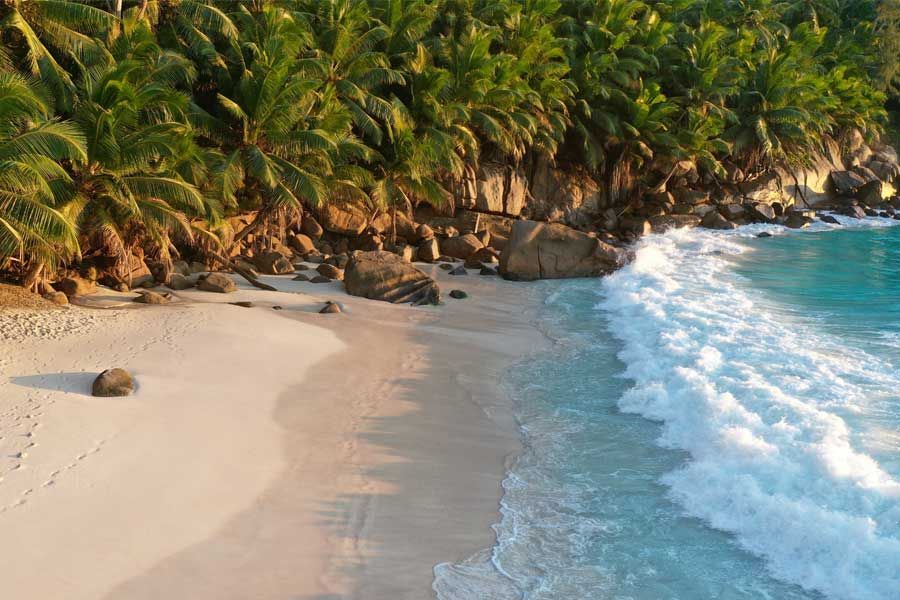
A visit to the Vallée de Mai works well as part of time spent on Praslin, alongside beach days at Anse Lazio or Anse Georgette. Quintrip's
Seychelles holiday packages
include stays across Mahé, Praslin, and La Digue — a consultant can help sequence a Praslin stop with enough time for the Vallée de Mai alongside its beaches.

Planning the Trip
The Seychelles stays warm year-round, with the wetter southeast trade wind season from May to September and calmer conditions from October to April. A Quintrip consultant can help plan a Praslin-inclusive itinerary with time for the Vallée de Mai, along with current pricing across the Seychelles package range.
FAQ
Where does the coco de mer grow?
Naturally only on Praslin and Curieuse islands in the Seychelles — nowhere else in the world.
How big is a coco de mer seed?
It can weigh over 20 kilograms, making it the largest and heaviest seed produced by any plant species.
Where can you see coco de mer palms?
The Vallée de Mai on Praslin, a protected UNESCO World Heritage forest, is the best place to see them in their natural habitat.
Can you buy a coco de mer seed as a souvenir?
Only from an authorised vendor with an official government stamp and certificate — uncertified seeds can be confiscated at customs.
Is the Vallée de Mai easy to combine with a Praslin beach stay?
Yes — it works well alongside beach time at Anse Lazio or Anse Georgette during a Praslin stop.

Related Posts